
We may earn a commission when you buy through links on this page. It costs you nothing extra. How we pick.
Updated November 28, 2026 · Oven times and safe temperatures from the USDA; doneness pull temperatures from Cook’s Illustrated (all listed under Sources).
🎄 Christmas Day 2026 is a Friday. Whatever ends up in your oven that week, this page has its time, its temperature and the number that tells you it’s done, on one sheet you can print.
From the cabin kitchen
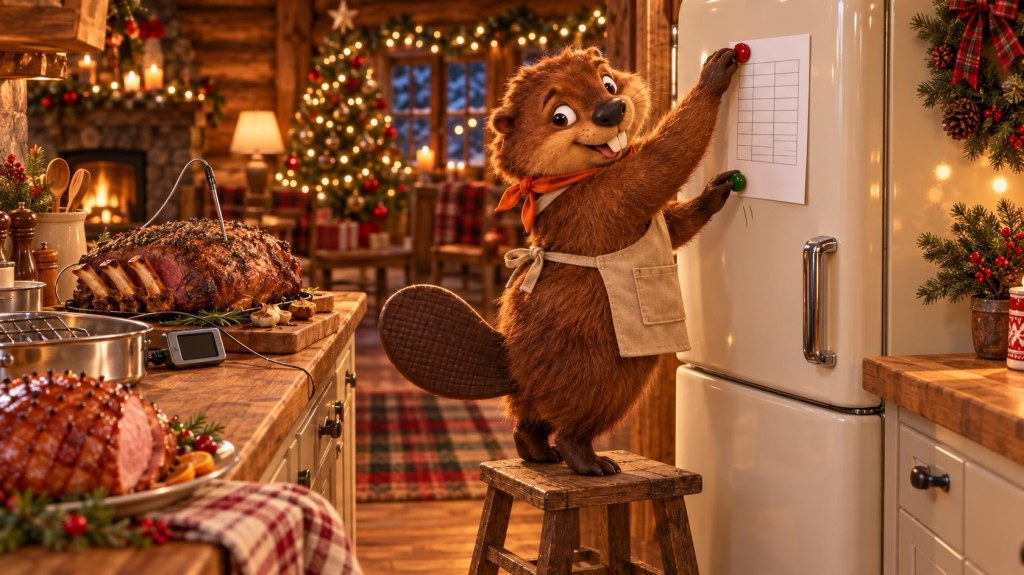
Gerzsi now has three holiday charts: one for turkey, one for prime rib and one for ham. He kept them in three browser tabs, then on three sticky notes, then on one sticky note he could no longer read. So he put everything on a single page and stuck it to the fridge. The first magnet held. The second one rolled under the stove and is still there.
Chef Tamás’s rule for every roast is the same one he teaches his apprentices: the clock helps you plan, the thermometer tells you when to stop. That’s why every row below has both.
The short answer
- Beef, lamb, pork and veal roasts: USDA safe minimum 145°F, then at least 3 minutes of rest.
- Turkey, goose, duck: 165°F.
- Ham: 140°F for a fully cooked ham, 145°F for one labeled “cook before eating,” 165°F for leftovers.
- Medium-rare prime rib: many cooks pull a large roast at 130°F and let it climb while it rests (Cook’s Illustrated). That’s below the USDA minimum, so it’s your call.
Holiday roast chart: oven, time and done temperature
| Roast | Size | Oven | Time | Done at (USDA) |
|---|---|---|---|---|
| Turkey, unstuffed | 12 to 14 lb | 325°F | 3 to 3¾ hours | 165°F |
| Turkey, unstuffed | 14 to 18 lb | 325°F | 3¾ to 4¼ hours | 165°F |
| Turkey, unstuffed | 20 to 24 lb | 325°F | 4½ to 5 hours | 165°F |
| Prime rib (beef rib roast), bone-in | 4 to 8 lb | 325°F | 23 to 30 min per lb | 145°F + 3 min rest |
| Beef rib roast, boneless | 4 lb | 325°F | 39 to 43 min per lb | 145°F + 3 min rest |
| Beef tenderloin, whole | 4 to 6 lb | 425°F | 45 to 60 min total | 145°F + 3 min rest |
| Leg of lamb, bone-in | 5 to 9 lb | 325°F | 20 to 26 min per lb | 145°F + 3 min rest |
| Pork loin roast, bone-in | 3 to 5 lb | 325°F | 20 to 25 min per lb | 145°F + 3 min rest |
| Pork crown roast | 6 to 10 lb | 325°F | 20 to 25 min per lb | 145°F + 3 min rest |
| Ham, fully cooked, bone-in half | 7 to 8 lb | 325°F | 18 to 25 min per lb | 140°F |
| Ham, fully cooked, bone-in whole | 14 to 16 lb | 325°F | 15 to 18 min per lb | 140°F |
| Ham, cook before eating, whole | 14 to 16 lb | 325°F | 18 to 20 min per lb | 145°F + 3 min rest |
| Goose, whole | whole bird | 325°F | 20 to 25 min per lb | 165°F |
| Duck, whole | whole bird | 375°F | 20 min per lb | 165°F |
When to pull a big beef or lamb roast
A big roast keeps cooking after it leaves the oven. Cook’s Illustrated’s carryover chart gives these pull temperatures for large roasts, so the meat lands where you want it after resting:
| You want | Beef or lamb: pull at | Pork: pull at |
|---|---|---|
| Rare | 125°F | – |
| Medium-rare | 130°F | – |
| Medium | 140°F | 150°F |
| Well done | 160°F | 160°F |
Where the probe goes
- Roasts: the thickest part, away from the bone. Bone reads hotter than the meat around it.
- Turkey and other birds: the innermost part of the thigh and wing and the thickest part of the breast, all at 165°F (USDA).
- Two tools, one job each: a leave-in probe stays in for the whole roast and beeps; an instant-read confirms a second spot before you carve. Our instant-read thermometer guide has the tested picks.
🦫 The roast kit Gerzsi set out (picked by testers, not by us)
- Leave-in thermometer: ThermoPro TP16, America’s Test Kitchen’s Best Buy. Set the alarm for your pull temperature and stop opening the oven.
- Roasting pan with rack: Cuisinart MultiClad Pro 16″, ATK’s winner. It held a 19 lb turkey in their test, so a prime rib or a whole ham fits.
- Slicing knife: Victorinox Fibrox Pro 12″ Granton, ATK’s winner for slicing knives. Long enough for a whole slice of roast in one pull.
- Resting tray: Nordic Ware Baker’s Half Sheet, ATK’s winner for rimmed baking sheets. The roast rests on it and the juice stays off the counter.
Cyber Monday is November 30, weeks before the roast. Tap through for today’s price; we don’t print prices because they change by the hour.
🦃 Dottie’s note: she checked the chart twice and is pleased that turkey is only three rows out of fourteen. Planning the amounts? How much prime rib per person → · How much ham per person → · Turkey still in the freezer? Christmas thaw dates by weight →
Questions people ask
What temperature should prime rib be when I take it out?
For medium-rare, Cook’s Illustrated pulls a large roast at 130°F; for medium, 140°F. The USDA safe minimum for beef roasts is 145°F with at least 3 minutes of rest.
How long do I cook a leg of lamb per pound?
The USDA chart gives 20 to 26 minutes per pound at 325°F for a 5 to 9 lb bone-in leg, and the same for a 4 to 7 lb boneless leg. Go by the thermometer.
What temperature should a ham be heated to?
140°F for a fully cooked ham, 145°F with a 3-minute rest for a ham labeled “cook before eating,” and 165°F for leftovers (USDA).
Can I roast meat at a low oven temperature, like 250°F?
The USDA does not recommend oven temperatures below 325°F for meat and poultry. Every time on this page assumes 325°F or hotter.
Why you can trust this page: every oven time and safe temperature comes from the USDA, and the doneness pull temperatures come from Cook’s Illustrated; all are listed below. Where the two differ (medium-rare is below the USDA minimum), we show both and say so. The gear picks are America’s Test Kitchen’s tests, not ours. Commissions never decide a pick. How we pick →
🖨️ The fridge copy
Gerzsi’s Holiday Roast Chart is one printable page: the oven table, the pull temperatures and a line to write down your roast, its weight and the time it went in. Print it, stick it on the fridge, use a better magnet than he did.
🦫 Want the next one by email? The Lodge Letter: one useful kitchen thing a week, and a note when a tested pick goes on sale. The chart is yours either way. No spam, he’s a beaver.
Read next
Gerzsi and Dottie are made up. The times, the temperatures and the test results are real. AI-made image.
Sources
- USDA FSIS: Roasting Those “Other” Holiday Meats
- University of Tennessee Extension (developed by USDA FSIS): Take the Guesswork out of Roasting a Turkey
- FoodSafety.gov: Safe Minimum Internal Temperatures
- Cook’s Illustrated: All About Carryover Cooking
- America’s Test Kitchen: The Best Leave-in Thermometers
- America’s Test Kitchen: Roasting Pans
- America’s Test Kitchen: Slicing Knives
- America’s Test Kitchen: The Best Rimmed Baking Sheets




Leave a Reply